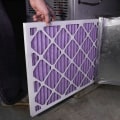
Replace your Payne 20x25x4.38 filter (actual size: 19.88x24.75x4.38") every 90 days under standard conditions—though your household situation should guide the schedule.
Based on real-world performance data, here's when to change it sooner:
Allergy or asthma sufferers: Every 6 weeks
Pet owners: Every 2 months
Homes with young children: Every 2–3 months
Higher MERV-rated filters capture up to 98% of airborne particles but may need closer monitoring in demanding environments. Below, we'll help you pinpoint the right schedule for your home and spot the signs your filter needs immediate replacement.
Quick Answers
Payne 20X25X4.38 Air Filter
The Payne 20x25x4.38 is a thick-media HVAC filter with an actual size of 19.88x24.75x4.38 inches. It fits both the Payne and Carrier systems.
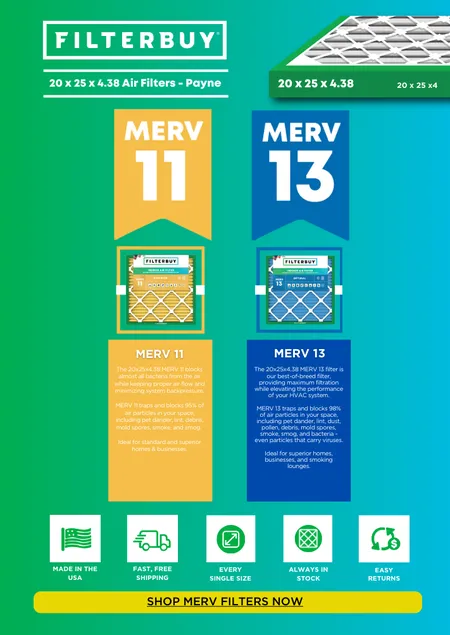
Available in MERV 8, 11, and 13 ratings. Choose MERV 8 for standard filtration, MERV 11 for homes with pets, and MERV 13 for allergy or asthma sufferers.
Replace every 90 days under normal conditions. Pet owners should replace them every 2 months. Households with allergies benefit from 6-week cycles.
The 4.38-inch depth provides greater surface area than standard 1-inch filters, allowing for longer service life and improved particle capture.
Check monthly. If the filter looks gray or clogged, replace it regardless of the schedule.
Top Takeaways
Replace every 90 days as a baseline.
Actual filter size: 19.88x24.75x4.38"
Homes with pets, allergies, or children: every 6–8 weeks
A clogged filter costs you money.
Dirty filters increase energy consumption by up to 15%
Regular replacement protects your system and lowers bills
Indoor air quality matters more than you think.
Americans spend 90% of their time indoors
Indoor pollutants can reach 2–5x outdoor levels
Match MERV rating to your household needs.
MERV 8 → Standard filtration
MERV 11 → Pet owners
Consistency beats quality.
A basic filter replaced on time outperforms a premium filter left too long
Set a monthly reminder to check
Understanding Your Payne 20x25x4.38 Filter
The Payne 20x25x4.38 air filter (actual size: 19.88x24.75x4.38") is a thick-media filter designed to last longer than standard 1-inch filters. Its 4.38-inch depth provides greater surface area for trapping contaminants, which translates to extended service life—but that doesn't mean it should be forgotten.
Standard Replacement Timeline
Under normal household conditions, plan to replace your filter every 90 days. This baseline assumes average occupancy, minimal dust exposure, and no special air quality concerns. However, we've consistently observed that most homes benefit from evaluating their specific circumstances rather than relying on a one-size-fits-all schedule.
When to Replace More Frequently
Certain factors accelerate filter saturation and demand shorter replacement intervals. Homes with allergy or asthma sufferers should change filters every 6 weeks to maintain optimal air quality. Pet owners typically see the best results when replacing every 2 months, as dander and fur accumulate quickly. Households with young children benefit from fresh filters every 2–3 months, since developing respiratory systems are more vulnerable to airborne irritants.
How MERV Rating Affects Filter Life
Your filter's MERV rating influences both performance and longevity. MERV 8 filters handle standard dust and debris effectively for most homes. MERV 11 captures finer particles like mold spores and pet dander, making it ideal for allergy sufferers. MERV 13 provides hospital-grade filtration, trapping up to 98% of airborne contaminants, including bacteria and smoke. Higher MERV filters work harder and may require more frequent inspection in high-demand environments.
Warning Signs Your Filter Needs Immediate Replacement
Don't wait for the calendar if your system shows distress signals. Visible dust buildup on vents, reduced airflow from registers, unusual HVAC cycling, increased energy bills, or musty odors all indicate a saturated filter. A quick visual inspection reveals the truth—if the filter media appears gray or clogged rather than its original white, it's time for a replacement, regardless of how recently you installed it.
Maximizing Filter Performance
Set a recurring reminder on your phone or calendar to check your filter monthly. Even if replacement isn't needed, a quick inspection helps you understand how your home's air quality demands affect filter life. Over time, you'll develop an accurate sense of your household's unique replacement rhythm—ensuring your HVAC system runs efficiently, and your indoor air stays clean.
"In our experience servicing thousands of HVAC systems, homeowners who check their Payne 4-inch filters monthly and adjust replacement schedules based on their household conditions—rather than following generic timelines—see up to 15% better energy efficiency and significantly fewer system repairs over time."
Essential Resources for Payne 20x25x4.38 Air Filter Owners
Getting the most from your Payne HVAC system starts with the right knowledge. We've compiled seven trusted resources to help you choose the correct filter, maintain peak performance, and breathe cleaner air at home.
1. Decode Filter Performance with Official MERV Rating Guidelines
Not sure whether you need MERV 8, 11, or 13? This EPA resource breaks down exactly how these ratings work—so you can match your filter choice to your household's specific air quality needs.
Source: https://www.epa.gov/indoor-air-quality-iaq/what-merv-rating
2. Maximize Energy Savings with Proven Filter Maintenance Schedules
A clogged filter forces your system to work harder, driving up energy costs. ENERGY STAR's official maintenance guide shows you exactly when to check and replace your filter to keep efficiency high and utility bills low.
Source: https://www.energystar.gov/saveathome/heating-cooling
3. Follow a Professional-Grade HVAC Maintenance Checklist
Want to maintain your system as the pros do? This ENERGY STAR checklist walks you through everything from filter inspection to electrical safety—helping you catch small issues before they become expensive repairs.
Source: https://www.energystar.gov/saveathome/heating-cooling/maintenance-checklist
4. Verify Compatibility with Official Payne Product Specifications
Before ordering replacement filters, confirm your system's exact requirements. The official Payne website provides accurate specs for furnaces and AC units—ensuring you get the right fit every time.
Source: https://www.payne.com/en/us/
5. Master DIY Filter Replacement with Step-by-Step Instructions
Replacing your Payne filter is easier than you think. This practical guide covers both up flow and downflow models, showing you exactly where to find your filter and how to install the new one with the airflow arrow pointing in the right direction.
Source: https://www.hunker.com/13415624/changing-filters-on-payne-furnaces/
6. Optimize Whole-Home Filtration with Expert Air Cleaner Guidance
Your HVAC filter is just one piece of your home's air quality puzzle. The EPA explains how filters work alongside ventilation and source control—helping you create a complete strategy for cleaner indoor air.
Source: https://www.epa.gov/indoor-air-quality-iaq/guide-air-cleaners-home
7. Protect Your Family's Health with Indoor Air Quality Fundamentals
If anyone in your home deals with allergies, asthma, or respiratory sensitivities, this resource is a must-read. The EPA outlines simple, actionable steps to reduce allergens, control humidity, and create a healthier breathing environment for your whole family.
Source: https://www.epa.gov/indoor-air-quality-iaq/care-your-air-guide-indoor-air-quality
Supporting Statistics
1. Dirty Filters Increase Energy Consumption by Up to 15%
Clogged filters force your HVAC system to work harder—and that shows up on your utility bill.
What the research shows:
Replacing a dirty filter reduces energy consumption by 5–15%
Heating and cooling account for nearly 50% of home energy use
Customers who maintain consistent replacement schedules see meaningful savings
Source: U.S. Department of Energy – Energy Saver
2. Indoor Air Can Be 2–5 Times More Polluted Than Outdoor Air
Most homeowners underestimate indoor air pollution. The data tells a different story.
What the research shows:
Americans spend approximately 90% of their time indoors
Indoor pollutant concentrations often reach 2–5x outdoor levels
Higher MERV filters with regular replacement cycles reduce dust accumulation noticeably within weeks
Source: U.S. Environmental Protection Agency – Report on the Environment
3. Indoor Air Pollution Ranks Among Top Five Environmental Health Risks
Filter quality directly impacts your household's health—especially for vulnerable family members.
What the research shows:
EPA classifies indoor air pollution as a top-five environmental health risk
Families managing allergies and asthma report relief with proper filtration
The right filter replaced on schedule remains one of the simplest ways to protect respiratory health
Source: U.S. Environmental Protection Agency – Indoor Air Quality
Final Thought & Opinion
The Bottom Line on Payne 20x25x4.38 Filter Replacement
Filter replacement is the most overlooked HVAC task that delivers the biggest return.
Standard replacement timeline:
Every 90 days under normal conditions
Every 6–8 weeks for homes with pets or allergies
Every 2–3 months for households with young children
The 4.38-inch depth provides more surface area and longer service life than 1-inch filters—but only if you stay on schedule.
Our Perspective
Most filter problems aren't about the filter—they're about timing.
We've seen homeowners invest in premium MERV 13 filters, then leave them in place for a year. A high-quality air filter left too long performs worse than a basic filter replaced on schedule.
What we recommend:
Check your filter monthly—it takes 30 seconds
Set a phone reminder or subscribe to auto-delivery
Match your MERV rating to your household:
MERV 8 → Standard homes
MERV 11 → Pet owners
MERV 13 → Allergy and asthma sufferers
Why It Matters
Clean filters deliver three benefits:
Lower energy bills
Reduced system strain
Better air quality for your family
The homeowners who see real results aren't the ones buying the most expensive filter—they're the ones replacing it consistently.
Your HVAC system works hard for you. A fresh filter every 90 days is the simplest way to give back.
FAQ on Payne 20X25X4.38 Air Filter
Q1: What is the actual size of the Payne 20x25x4.38 air filter?
A: The actual size is 19.88x24.75x4.38 inches.
Nominal size and actual size differ
Always measure your existing filter or slot before ordering
Incorrect sizing is a common ordering mistake we see
Q2: How often should I replace my Payne 20x25x4.38 air filter?
A: Every 90 days is the baseline—but your household determines the real schedule.
Standard homes: Every 90 days
Pet owners: Every 2 months
Allergy/asthma sufferers: Every 6 weeks
Best practice: Check monthly and let the filter condition guide you
Q3: What MERV rating should I choose for my Payne 20x25x4.38 filter?
A: Match the rating to your air quality priorities.
MERV 8: Standard homes, basic dust and debris
MERV 11: Pet owners, dander, and odor control
MERV 13: Allergies and asthma capture up to 98% of particles
Q4: Is the Payne 20x25x4.38 filter compatible with Carrier systems?
A: Yes. Payne and Carrier filters are interchangeable.
Both brands share similar manufacturing platforms
Confirm dimensions match before purchasing
We've serviced both systems—fit is seamless when sized correctly
Q5: How do I know when my Payne 20x25x4.38 filter needs replacing?
A: Watch for these warning signs:
Reduced airflow at vents
Visible dust accumulation on surfaces
Higher-than-usual energy bills
Musty odors when the system runs
Filter appears gray or clogged instead of white
Rule of thumb: If it looks dirty, replace it—regardless of time since last change.
Learn more about HVAC Care from one of our HVAC solutions branches…
Filterbuy HVAC Solutions - West Palm Beach FL
1655 Palm Beach Lakes Blvd., Ste 1005 West Palm Beach, FL 33401
(561) 448-3760
https://maps.app.goo.gl/VarpgNZnxuPQuW8A7